
Breathing pauses during sleep: what should you do?
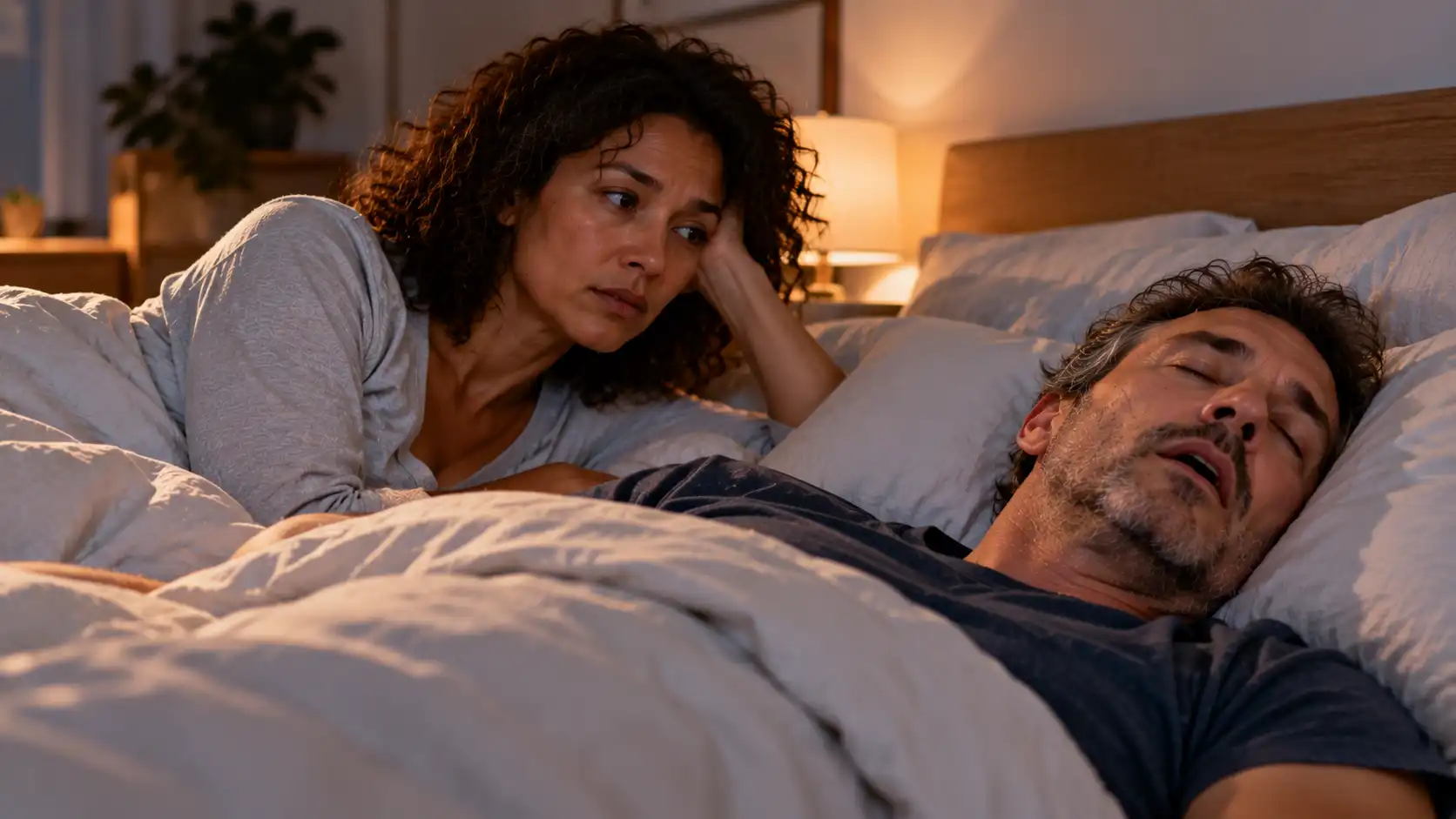
Repeated breathing pauses during sleep warrant an appointment, especially with snoring, gasping or daytime sleepiness. If the person is unresponsive and is not breathing normally, call 15 or 112 immediately in France, or the local emergency number elsewhere, and follow the dispatcher’s resuscitation instructions.
Important
Important: Do not dismiss repeated breathing pauses observed by a partner simply because they do not wake you. Seek advice about an assessment.
Repeated cessation of breathing requires medical attention. If a person is not responding and is not breathing normally, immediate medical attention is needed.
What the Partner Can Observe
Pauses may be followed by a loud resumption of breathing, a movement or a brief state of wakefulness. It is helpful to describe their approximate frequency and associated symptoms rather than trying to count each episode exactly.
The related guide Sleep apnea: which symptoms should raise concern? explains breathing symptoms at night and their daytime effects.
Why a video isn’t enough to diagnose
A home recording may show snoring or pausing but does not measure all necessary parameters correctly. Dedicated examinations quantify respiratory events and their effects.
What Daytime Symptoms Increase Suspicion
Sleepiness, fatigue, waking unrefreshed, cognitive difficulties and morning headaches may accompany breathing pauses. Risk and symptoms also depend on age, weight, anatomy and other factors.
The related guide Home sleep apnea testing: what is respiratory polygraphy for? explains home breathing recordings and their limitations.
The follow-up depends on the assessment
Depending on the situation, respiratory polygraphy or polysomnography may be offered. Treatment is then tailored to the individual and may include lifestyle measures, a mandibular advancement device or continuous positive airway pressure.
Responding to observed breathing pauses
Arrange an appointment for repeated breathing pauses followed by the person’s usual recovery. If they are unresponsive and not breathing normally, call 15 or 112 immediately in France, or the local emergency number elsewhere, and follow the dispatcher’s resuscitation instructions.
The related guide Sleep apnea: which symptoms should raise concern? explains breathing symptoms at night and their daytime effects. The article Can you have sleep apnea without snoring? explains why unnoticed snoring does not exclude a breathing disorder.
The observation of a relative is useful because the sleeping person does not perceive his whole night. However, it remains partial: every minute is not monitored and the parameters of an examination are not measured. So report what you’ve seen or heard, with the uncertainties. The practitioner can then decide how to check the breathing, without turning a testimony into a recording.
The related guide Polysomnography: what happens during an overnight sleep study? explains signals recorded during a clinical overnight sleep study. The article Home sleep apnea testing: what is respiratory polygraphy for? explains home breathing recordings and their limitations.
Frequently asked questions
Key takeaways
Repeated breathing pauses during sleep deserve attention. A partner’s observations are useful but do not replace appropriate testing. Treatment depends on the diagnosis and severity. Arrange an appointment for repeated pauses followed by the person’s usual recovery. If they are unresponsive and not breathing normally, call 15 or 112 immediately in France, or the local emergency number elsewhere, and follow the dispatcher’s resuscitation instructions.
Partagez cet article, choisissez votre plateforme !
 Numa Costa
The pen name under which I write articles and develop my editorial websites. Curious by nature, I like to understand how things work, explore everyday questions and make information easier to understand and use.
→ More about the author
Related Posts


Understand your sleep,
live your nights better.