
Menopause and sleep: why waking at night becomes more common

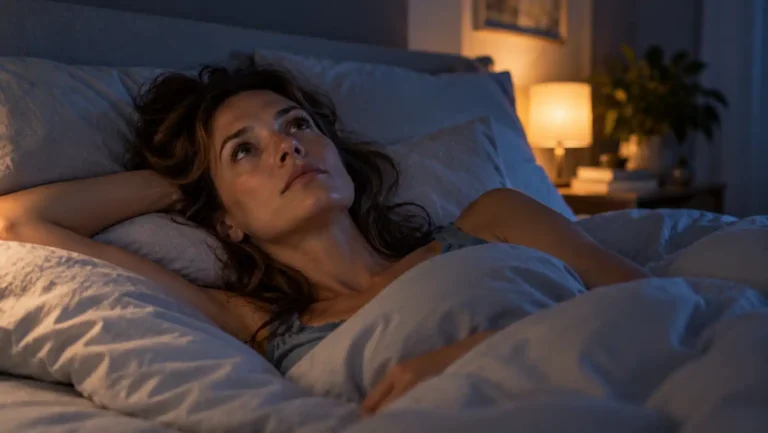
During perimenopause and menopause, hot flashes, night sweats, mood swings and hormonal changes can disrupt sleep and cause awakening. Persistent insomnia requires specific treatment.
Important
Important: Menopause-related waking can have several causes. Persistent problems are not simply poor bedtime discipline; discuss available options with a clinician.
Awakenings can occur as early as perimenopause. Hormonal symptoms may be combined with insomnia or other sleep disorders.
Hot flushes and night sweats can interrupt sleep
A hot flash or night sweats can cause a state of wakefulness and make it difficult to fall asleep. The discomfort depends on the frequency and severity of the symptoms.
The related guide Waking during the night: why does it happen? explains night-time awakenings and symptoms worth describing.
Sleep is not explained by hormones alone.
Stress, age, sleep apnea, mood, pain, and lifestyle habits may overlap. In some women, apnea may be less noticeable if snoring is not the predominant symptom.
Adapting the environment without promising a miracle solution
A rather cool room, breathable bedding, light clothing and reduced late drinking can improve comfort. These measures are not a substitute for treatment of severe symptoms or chronic insomnia.
The related guide Can you have sleep apnea without snoring? explains why unnoticed snoring does not exclude a breathing disorder.
When to seek advice
Frequent awakenings, significant impairment of daily life, daytime sleepiness, or difficult menopausal symptoms may warrant a discussion with a professional to consider appropriate options.
Describing night-time awakenings during menopause
Write down the wake-ups with or without hot flashes and their impact on the day. This distinction helps the practitioner to discuss the symptoms of menopause and possible associated insomnia.
The related guide Waking during the night: why does it happen? explains night-time awakenings and symptoms worth describing. The article Insomnia: when should you seek medical advice? explains reasons to seek advice and details to prepare for an appointment.
To understand nights, see if the wake-ups coincide with the heat you feel or if they also occur in the absence of heat. This distinction does not provide a diagnosis, but it enriches the consultation. The comfort of the room, the symptoms and the health context can be discussed together. Medical options should then be discussed according to your situation, without offering a one-size-fits-all solution for all women.
The related guide Can you have sleep apnea without snoring? explains why unnoticed snoring does not exclude a breathing disorder. The article Bedroom temperature: what is comfortable for sleep? explains temperature, bedding and practical adjustments to comfort.
Frequently asked questions
Key takeaways
Menopause can disrupt sleep by several mechanisms. Hot flashes and night sweats are common but not exclusive. A sustained complaint deserves a comprehensive approach. Write down the wake-ups with or without hot flashes and their impact on the day. This distinction helps the practitioner to discuss the symptoms of menopause and possible associated insomnia.
Partagez cet article, choisissez votre plateforme !
 Numa Costa
The pen name under which I write articles and develop my editorial websites. Curious by nature, I like to understand how things work, explore everyday questions and make information easier to understand and use.
→ More about the author
Related Posts





Understand your sleep,
live your nights better.