
Polysomnography: what happens during an overnight sleep study?
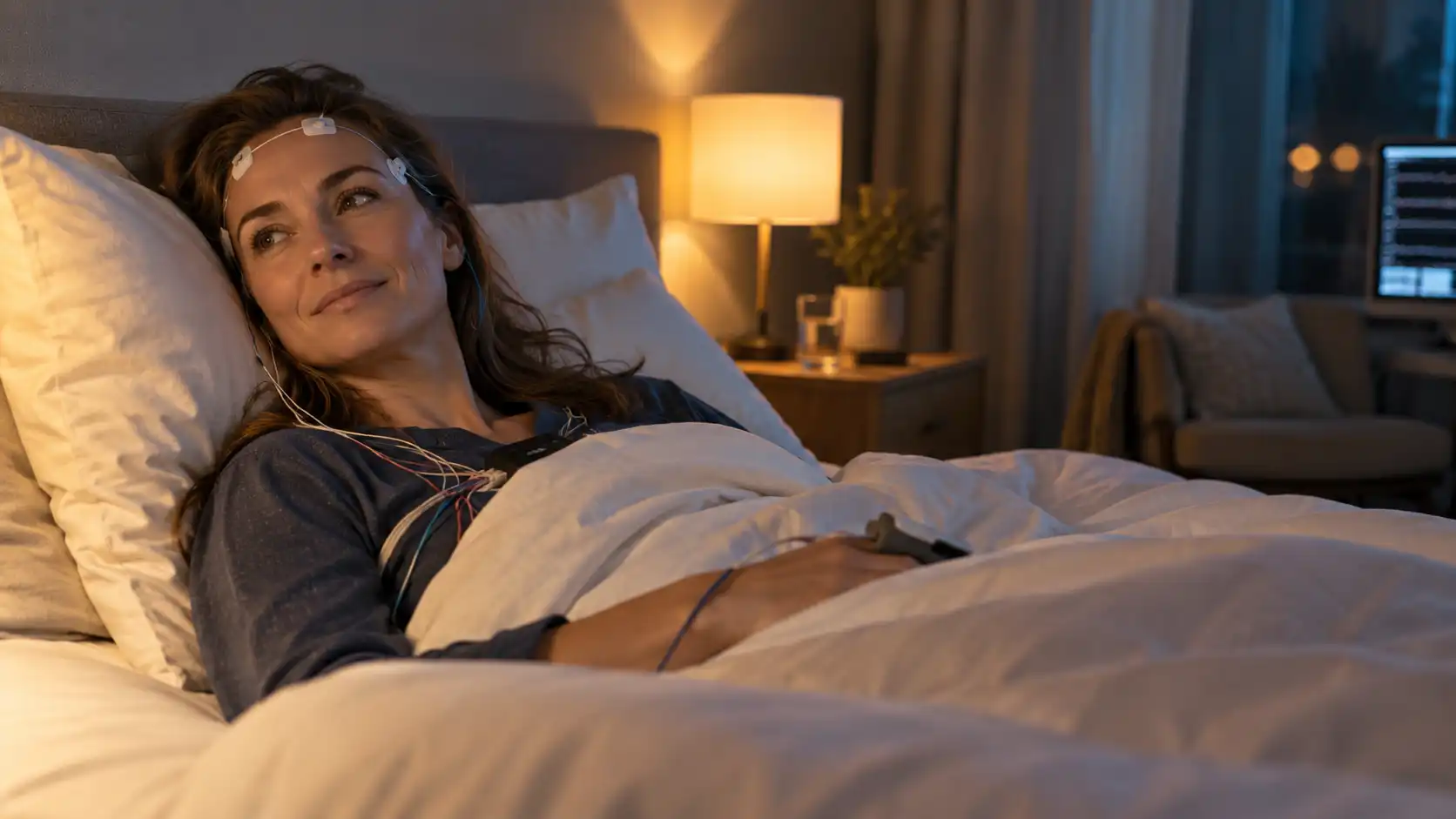
Polysomnography is a comprehensive recording of sleep that measures several signals during a night, including brain activity, eye movements, muscle tone, breathing, oxygenation and heart rate according to the protocol.
Important
Important: Polysomnography is requested and interpreted in a clinical context. Its results cannot be reduced to a single score.
Polysomnography links sleep stages to breathing events and movements. The sensors record signals without any invasive gestures.
Why this test measures more than a smartwatch
The sensors identify the stages of sleep and link respiratory or motor events to the architecture of the night. A consumer device does not directly measure all these parameters.
The related guide Home sleep apnea testing: what is respiratory polygraphy for? explains home breathing recordings and their limitations.
How the sensors are fitted
Electrodes and sensors are placed before bedtime. They may seem numerous, but the examination is noninvasive. The team checks the signals and then lets the person sleep in the conditions provided by the centre.
An imperfect night is often interpretable
Sleeping less well than at home because of the location and sensors is common. Experts interpret the data taking this into account; it is not necessary to produce a “perfect” night.
The related guide Sleep problems: what happens at a medical appointment? explains symptom descriptions and how any tests are selected.
In which cases can it be proposed?
Depending on the question to be discussed with a professional, polysomnography may explore complex breathing disorders, movement, some parasomnia, or unexplained drowsiness. The choice belongs to the professional.
Follow the instructions before recording
Follow the centre’s instructions about medicines, caffeine and preparation. Do not change treatment to try to sleep better during the study without medical instructions. Tell the team about irritation or an uncomfortable sensor.
The related guide Sleep cycles: how does a night’s sleep work? explains the succession of stages and why cycles do not follow an exact timer. The article Sleep apnea: which symptoms should raise concern? explains breathing symptoms at night and their daytime effects.
The related guide Sleep problems: what happens at a medical appointment? explains symptom descriptions and how any tests are selected. The article Home sleep apnea testing: what is respiratory polygraphy for? explains home breathing recordings and their limitations.
Practical guidelines are used to obtain an interpretable record and to avoid unnecessary changes in your habits. Ask the team what to bring, how the sensors are installed and what to do if a problem occurs. The result is more than just a sleep score. The results are interpreted alongside your symptoms and the context that prompted the test.
Frequently asked questions
Key takeaways
Polysomnography measures several functions during sleep and records more information than a consumer device. It is chosen to answer a clinical question, rather than automatically for every sleep complaint. Follow the centre’s instructions about medicines, caffeine and preparation. Do not change treatment to try to sleep better during the study without medical instructions. Tell the team about irritation or an uncomfortable sensor.
Sources
Assurance Maladie — Apnée du sommeil symptômes et diagnostic — 2026
Last editorial check: October 2026
Partagez cet article, choisissez votre plateforme !
 Numa Costa
The pen name under which I write articles and develop my editorial websites. Curious by nature, I like to understand how things work, explore everyday questions and make information easier to understand and use.
→ More about the author
Related Posts



Understand your sleep,
live your nights better.