
Home sleep apnea testing: what is respiratory polygraphy for?
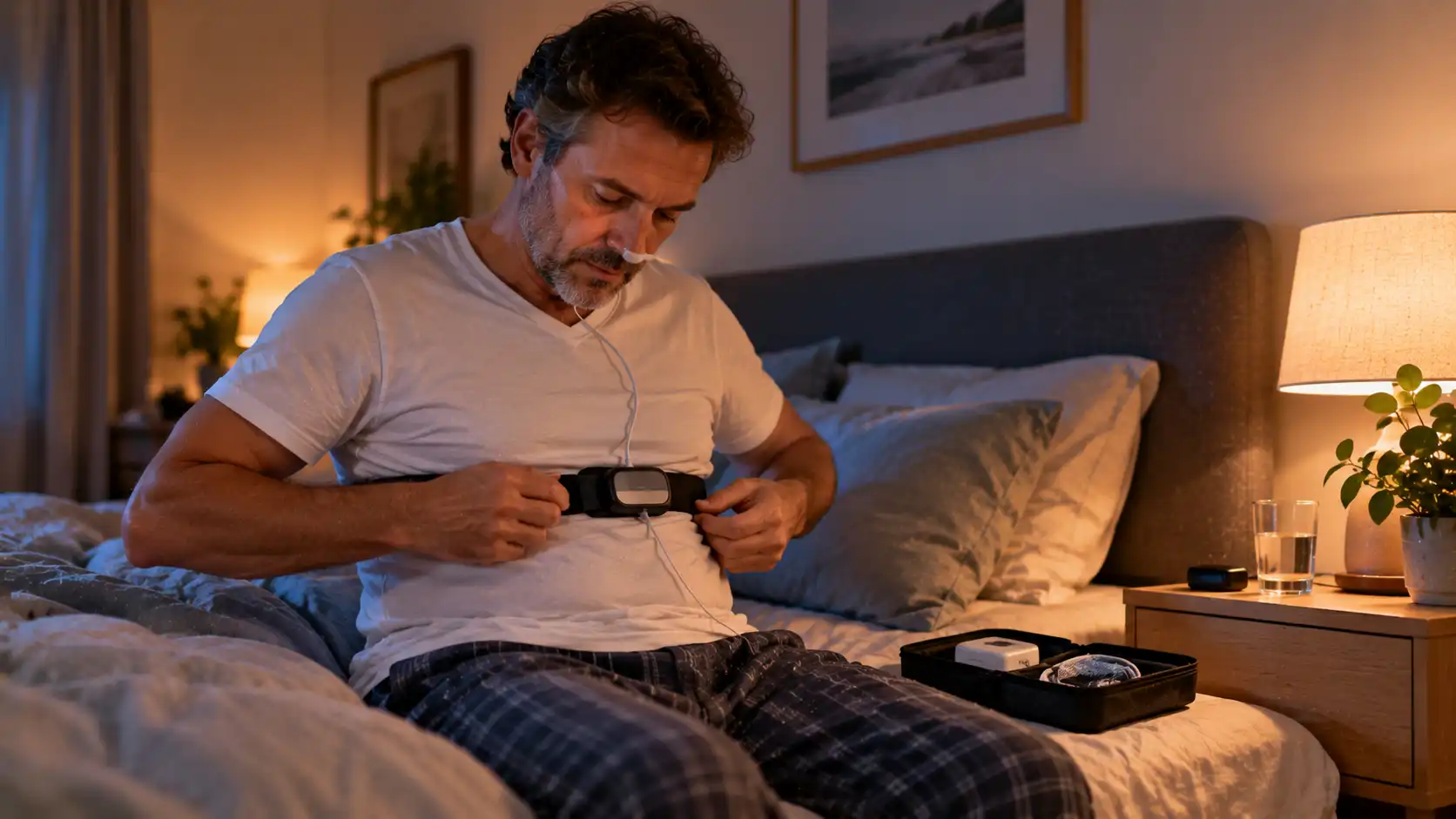
The respiratory polygraph mainly records breathing during sleep, often at home. It is often used when obstructive sleep apnea is suspected, but it is not a substitute for polysomnography in all situations.
Important
Important: Respiratory polygraphy does not record every measure captured by polysomnography. A negative result may not settle the question if symptoms persist.
A polygraph mainly examines night breathing. Its possibilities and limitations explain why further examination is sometimes necessary.
What signals are recorded
Depending on the device, respiratory polygraphy records airflow, chest and abdominal movements, oxygen levels and sometimes position or snoring. Without the EEG signals used in polysomnography, it does not directly measure sleep stages or actual sleep time. Calculating events over recording time may therefore underestimate their frequency during sleep, particularly if you are awake for long periods.
The related guide Sleep apnea: which symptoms should raise concern? explains breathing symptoms at night and their daytime effects.
Why home exam is convenient
The person sleeps in his usual environment and the equipment is lighter. A demonstration is performed to learn how to install or check the sensors.
Why a normal result does not always conclude medical evaluation
If the clinical suspicion remains strong or if the recording is of poor quality, a more complete examination may be necessary. Interpretation depends on the context and quality of the signals.
The related guide Polysomnography: what happens during an overnight sleep study? explains signals recorded during a clinical overnight sleep study.
After the recording
The practitioner analyses the respiratory events, their frequency and oxygenation and then relates the results to the symptoms. Treatment is not decided on an isolated figure.
Check the positioning and settings of the sensors
Before taking the device home, make sure you understand how to fit it and whom to contact if a problem occurs. When returning it, report a detached sensor or a night very different from your usual sleep.
The related guide Sleep apnea: which symptoms should raise concern? explains breathing symptoms at night and their daytime effects. The article Breathing pauses during sleep: what should you do? explains observed breathing pauses and the distinction from an emergency.
Testing at home may seem simpler, but clear instructions still matter. Check that you know how to fit the equipment and contact the care team as arranged. When returning it, report any detached sensor or difficulty using it. That information helps the team assess recording quality; you do not have to interpret the traces yourself.
The related guide Sleep problems: what happens at a medical appointment? explains symptom descriptions and how any tests are selected. The article Polysomnography: what happens during an overnight sleep study? explains signals recorded during a clinical overnight sleep study.
Frequently asked questions
Key takeaways
Respiratory polygraphy mainly assesses breathing during the night, often in your familiar home environment. Results need to be interpreted alongside symptoms and recording quality. Before taking the equipment home, check the fitting instructions and contact arrangements. Report any detached sensor or unusual night so the team can judge whether the recording is adequate.
Sources
Assurance Maladie — Apnée du sommeil symptômes et diagnostic — 2026
Last editorial check: October 2026
Partagez cet article, choisissez votre plateforme !
 Numa Costa
The pen name under which I write articles and develop my editorial websites. Curious by nature, I like to understand how things work, explore everyday questions and make information easier to understand and use.
→ More about the author
Related Posts




Understand your sleep,
live your nights better.