
Unrefreshing sleep: what does it mean?

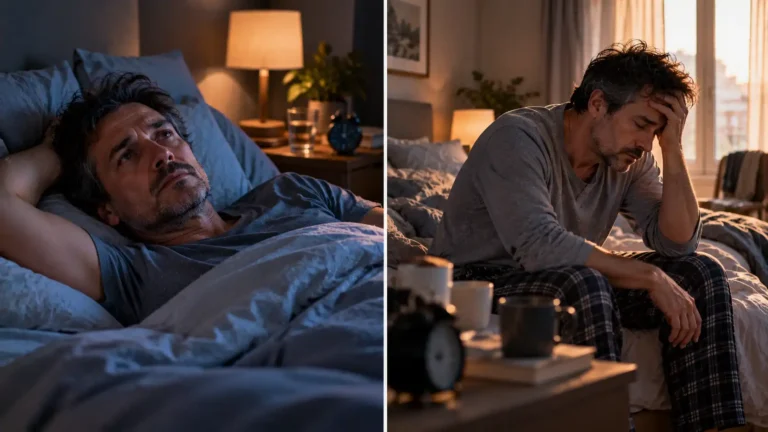
Unrefreshing sleep means feeling that you have not recovered despite spending the night asleep. It can accompany insomnia, fragmented sleep, sleep-related breathing problems, a shifted body clock or other health problems.
Important
Important: Feeling unrefreshed is a genuine experience, but it does not identify its cause on its own. Avoid diagnosing yourself from one sign.
“I’ve slept, but I don’t feel rested.” This feeling deserves a closer look. Does it happen occasionally or almost every morning? Does it come with an urge to sleep during the day, or mainly a lack of energy? These distinctions help guide the assessment.
A real feeling, even when the hours seem right
The quality of sleep is not measured by its duration alone. Micro-awakening, poor rhythm synchronization or a state of hypervigilance can leave someone feeling that the night brought no recovery without remembering many awakenings.
The related guide Sleep quality or duration: which matters most? explains sleep duration, continuity and daytime functioning.
What clues to look for around the night
Snoring, breathing pauses, movement, sweating, pain, frequent urges to urinate, very irregular schedules or late drinking may be indicative. It’s helpful to distinguish what happens at night from what you feel in the morning.
Why app scores cannot settle the question
A high score does not guarantee that sleep is restful, and a low score does not prove a disorder. Consumer devices do not measure sleep as accurately as a polysomnograph.
The related guide Sleep apnea: which symptoms should raise concern? explains breathing symptoms at night and their daytime effects.
When to Talk to a Professional
If the impression persists for several weeks, is accompanied by severe drowsiness or impairs functioning, a consultation can help to find a cause and avoid self-diagnosis.
Specify the sensation of poor recovery
Describe what it means to you not to recover: lack of energy, sleep during the day, or difficulty waking up. Instead of automatically attributing the symptoms to a phase of sleep, report the symptoms at night.
The related guide Sleep quality or duration: which matters most? explains sleep duration, continuity and daytime functioning. The article Tired after a full night’s sleep: why? explains morning fatigue and causes beyond the number of hours slept.
Looking for what makes the night unhealthy is not the same as questioning your feelings. Rather, it makes it clear. The impression of light sleep, painful awakening, and daytime drowsiness can lead to exploring different avenues. The starting point is what you’re experiencing; the next step is to relate that complaint to your schedule, symptoms, and health context.
The related guide Sleep apnea: which symptoms should raise concern? explains breathing symptoms at night and their daytime effects. The article Sleep problems: what happens at a medical appointment? explains symptom descriptions and how any tests are selected.
Frequently asked questions
Key takeaways
A long night can still feel unrefreshing. The associated symptoms give clues as to the cause. The lingering feeling deserves to be explored rather than compensated for only by more time in bed. Describe what it means to you not to recover: lack of energy, sleep during the day, or difficulty waking up. Instead of automatically attributing the symptoms to a phase of sleep, report the symptoms at night.
Partagez cet article, choisissez votre plateforme !
 Numa Costa
The pen name under which I write articles and develop my editorial websites. Curious by nature, I like to understand how things work, explore everyday questions and make information easier to understand and use.
→ More about the author
Related Posts






Understand your sleep,
live your nights better.