
Daytime sleepiness: when is it a problem?

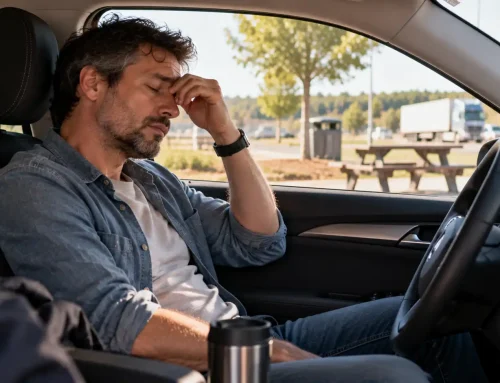
Daytime sleepiness becomes a concern when an uncontrollable need to sleep occurs regularly in situations where you should be awake, especially if it interferes with activities or creates a safety risk.
Important
Important: An irresistible urge to sleep, particularly in dangerous situations, must not be dismissed. Do not drive if you are struggling to stay awake.
The urge to sleep after lunch is not the same as falling asleep during a conversation. The involuntary nature and danger of the situation are essential.
Fatigue and sleepiness are not synonymous
Rather, fatigue is a lack of energy or a feeling of exhaustion. Sleepiness is a propensity to fall asleep. You can be exhausted and not be able to sleep, or you can fall asleep easily and not feel physically exhausted.
The related guide Fatigue or sleepiness: how can you tell the difference? explains the distinction between low energy and a tendency to fall asleep.
What are the signs to react to?
Falling asleep during meetings, in front of a screen, in transport or during a conversation, repeated need for naps and struggle to keep your eyes open are more telling signals than an occasional dip in energy.
Why Seek the Cause
Lack of sleep, shifting schedules, medications, sleep apnea, narcolepsy, and other disorders can cause excessive sleepiness. Treatment therefore depends on the mechanism and not on temporary stimulation by coffee.
The related guide Microsleeps and driving: why you should take them seriously explains warning signs while driving and the need to stop safely.
Safety comes first
If you feel you may fall asleep at the wheel, stop in a safe place as soon as possible. Opening a window, turning up music or trying harder to stay awake does not remove the risk.
Recognising sleepiness that disrupts your day
Stop driving or doing hazardous activities when you are struggling to stay awake. Recurrent sleepiness despite enough sleep warrants an appointment, even if your Epworth Sleepiness Scale score is low.
The related guide Fatigue or sleepiness: how can you tell the difference? explains the distinction between low energy and a tendency to fall asleep. The article Microsleeps and driving: why you should take them seriously explains warning signs while driving and the need to stop safely.
The related guide Sleep apnea: which symptoms should raise concern? explains breathing symptoms at night and their daytime effects. The article Sleep problems: what happens at a medical appointment? explains symptom descriptions and how any tests are selected.
The circumstances of sleepiness also matter for safety. Dozing in front of the television does not carry the same immediate risk as losing alertness on the road, although both are worth describing. Record when you doze, how often it happens and what you do to try to stay awake. These observations are more useful than judging your motivation or willpower.
Frequently asked questions
Key takeaways
Sleepiness is a tendency to fall asleep and differs from fatigue. Repeated involuntary dozing is abnormal. At the wheel, it creates an immediate safety risk. Stop driving or doing hazardous activities when you are struggling to stay awake. Recurrent sleepiness despite enough sleep warrants an appointment, even if your Epworth Sleepiness Scale score is low.
Partagez cet article, choisissez votre plateforme !
 Numa Costa
The pen name under which I write articles and develop my editorial websites. Curious by nature, I like to understand how things work, explore everyday questions and make information easier to understand and use.
→ More about the author
Related Posts






Understand your sleep,
live your nights better.