
Sleep apnea: which symptoms should raise concern?
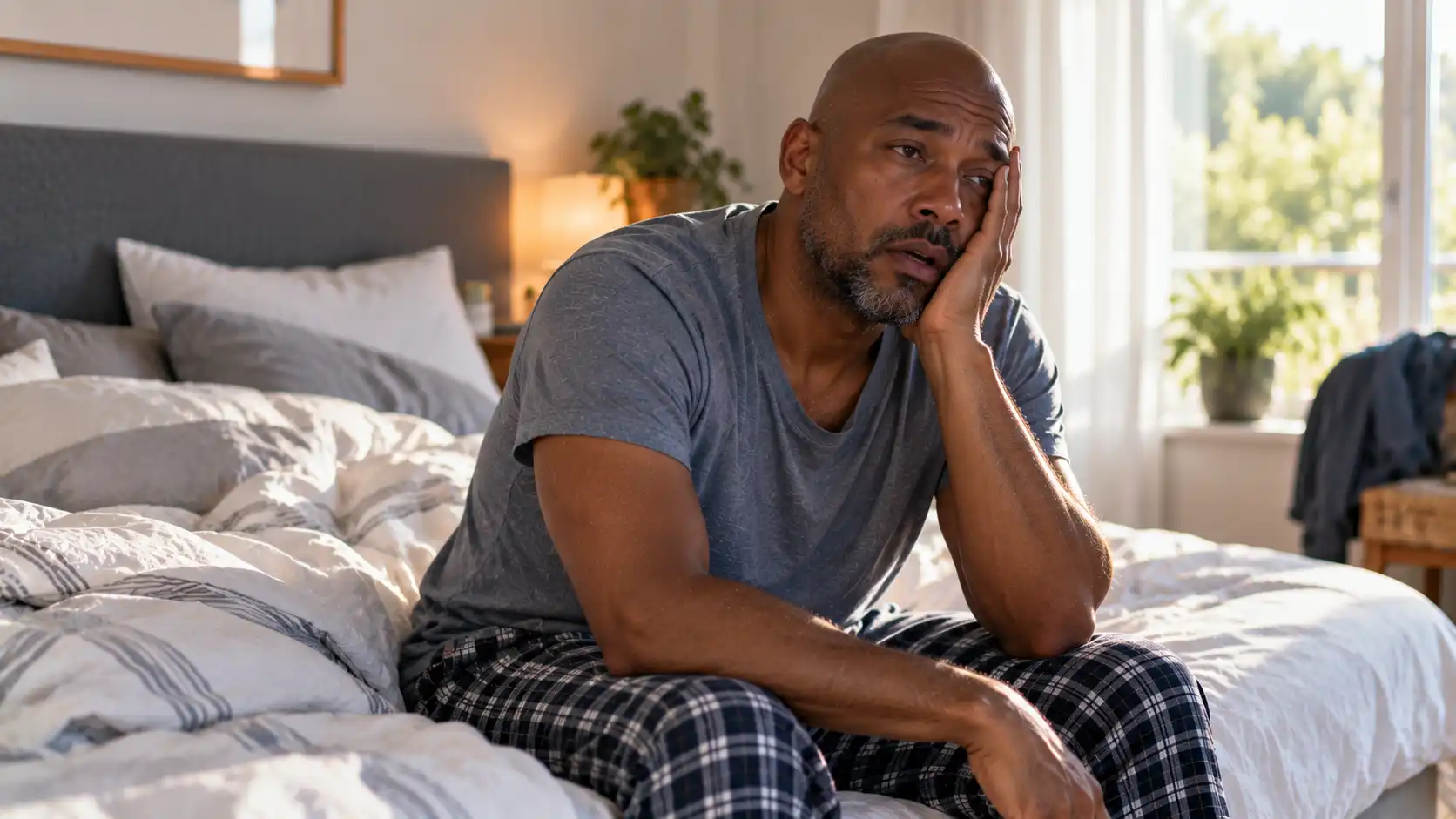
Obstructive sleep apnea can cause irregular snoring, observed breathing pauses, gasping, unrefreshing sleep, fatigue or daytime sleepiness. Diagnosis requires a medical assessment and a sleep study.
Important
Important: Sleep apnoea cannot be diagnosed from snoring alone. Suggestive symptoms call for assessment and, where appropriate, a suitable sleep test.
Sometimes a partner notices the breathing pauses. In other cases, the person seeks advice about daytime sleepiness or unrefreshing nights. None of these signs alone establishes a diagnosis: the combination of symptoms and their context guides the assessment.
What happens during the night
In obstructive sleep apnea-hypopnea syndrome, airflow repeatedly decreases or stops during sleep. These events cause brief arousals and disrupt sleep continuity, even if the person is unaware of them.
The related guide Breathing pauses during sleep: what should you do? explains observed breathing pauses and the distinction from an emergency.
Night-time signs to look for
Snoring, observed breathing pauses, choking, restless sleep and sometimes a frequent need to urinate may be reported. A partner’s observations are often valuable because the sleeping person may not notice the episodes.
Daytime signs
Waking unrefreshed, marked fatigue, difficulty concentrating, irritability, morning headaches and especially excessive sleepiness can occur. Symptoms vary, and not everyone has all of them.
The related guide Home sleep apnea testing: what is respiratory polygraphy for? explains home breathing recordings and their limitations.
Why you should avoid self-diagnosis
Diagnosis and severity are established from the clinical context and a respiratory or polysomnographic record. Treatment then depends on the symptoms, severity and individual characteristics.
Preparing for an assessment of suspected sleep apnea
Tell your doctor about daytime symptoms and observations made during the night. If your alertness is reduced, avoid driving while awaiting assessment; an app cannot rule out sleep apnea.
The related guide Snoring: when is it harmless, and when should you seek advice? explains snoring and associated symptoms that need assessment. The article Breathing pauses during sleep: what should you do? explains observed breathing pauses and the distinction from an emergency.
The related guide Can you have sleep apnea without snoring? explains why unnoticed snoring does not exclude a breathing disorder. The article Home sleep apnea testing: what is respiratory polygraphy for? explains home breathing recordings and their limitations.
The signs of sleep apnea need to be considered together. Snoring alone does not carry the same information as snoring accompanied by observed breathing pauses and unintended dozing. Conversely, the absence of a familiar sign does not rule it out. This explains why an online symptom list can help you prepare for an appointment but cannot confirm a diagnosis.
Frequently asked questions
Key takeaways
Repeated breathing pauses fragment sleep. Night-time and daytime signs need to be considered together. Diagnosis requires an appropriate assessment and sleep study. Tell your doctor about daytime symptoms and observations made during the night. If your alertness is reduced, avoid driving while awaiting assessment; an app cannot rule out sleep apnea.
Sources
Partagez cet article, choisissez votre plateforme !
 Numa Costa
The pen name under which I write articles and develop my editorial websites. Curious by nature, I like to understand how things work, explore everyday questions and make information easier to understand and use.
→ More about the author
Related Posts



Understand your sleep,
live your nights better.