
Snoring: when is it harmless, and when should you seek advice?
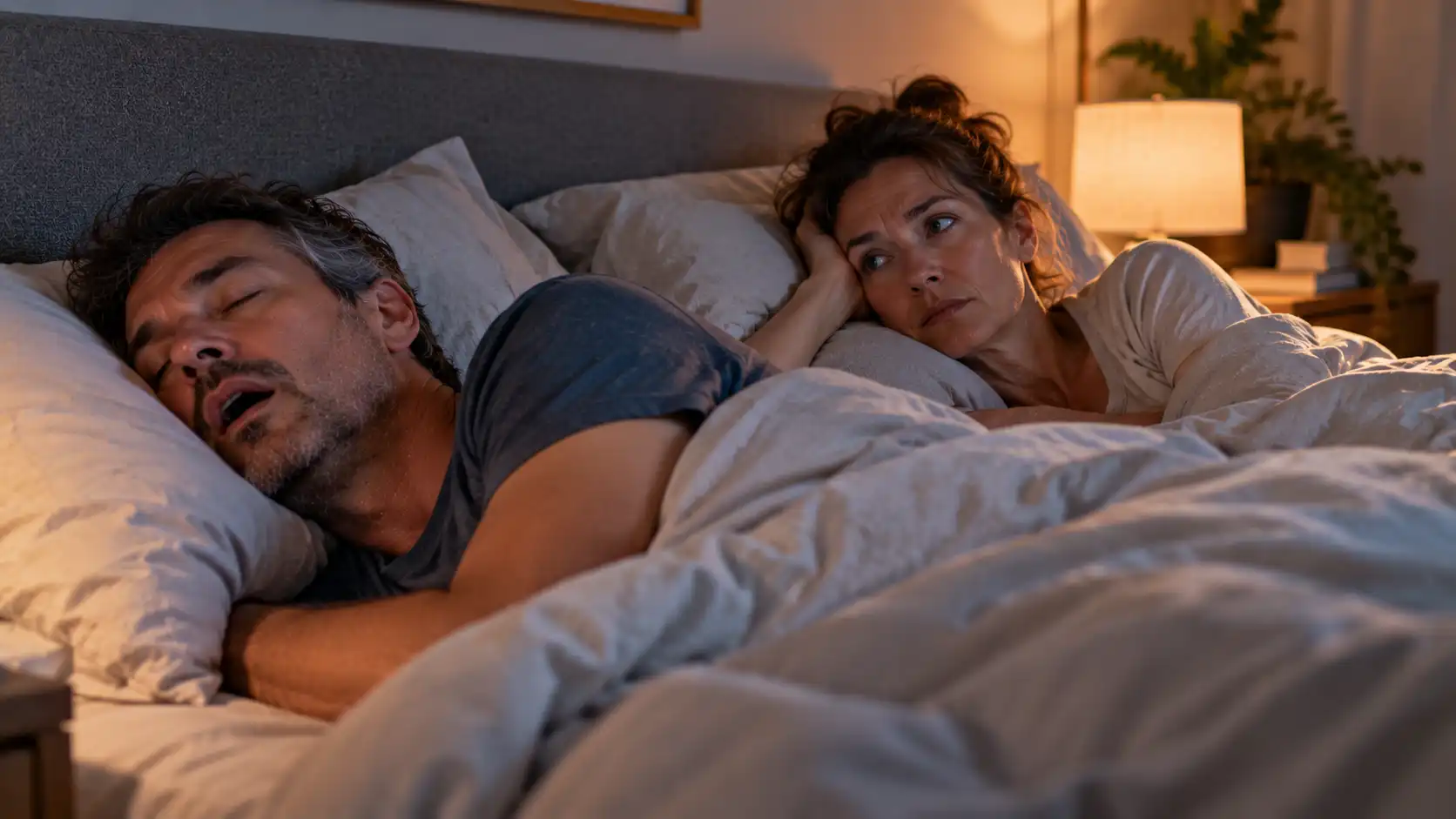
Snoring is frequent and often not serious, but it needs attention when it is very noisy, irregular, associated with breathing pauses, suffocation at night, poor sleep or daytime sleepiness.
Important
Important: Snoring may be troublesome without sleep apnoea, but observed breathing pauses or pronounced daytime sleepiness warrant evaluation.
Snoring can disturb sleep, but it is not the same as sleep apnoea. Observed breathing pauses, gasping or daytime sleepiness are reasons to look beyond the noise and seek assessment.
Why are we snoring?
Snoring is the vibration of the tissues of the upper airways when air passes through during sleep. Back position, alcohol, nasal congestion, and certain anatomical factors may contribute to it.
The related guide Sleep apnea: which symptoms should raise concern? explains breathing symptoms at night and their daytime effects.
When Snoring Becomes a Warning Sign
A partner may notice pauses in breathing followed by a loud gasp, choking or very restless sleep. Together with daytime sleepiness, morning headaches or high blood pressure, these signs warrant assessment for possible obstructive sleep apnea.
Why sound intensity is not enough
Very loud snoring alone does not indicate the severity of a respiratory disorder, and some people with apnea snore little or variedly. It is the combination of symptoms and, if necessary, a sleep recording that makes it possible to assess the situation.
The related guide Breathing pauses during sleep: what should you do? explains observed breathing pauses and the distinction from an emergency.
What initial benchmarks are useful
It is important to note the frequency, sleeping position, the effect of alcohol, the partner’s observations and daytime sleepiness in preparation for a consultation. Applications that record noise may illustrate a trend but do not diagnose apnea.
Watch for snoring and associated signs
Ask your partner whether they notice breathing pauses or gasping. Do not rely only on loudness or an app. Regular snoring in a child should also be discussed with a doctor.
The related guide Sleep apnea: which symptoms should raise concern? explains breathing symptoms at night and their daytime effects. The article Breathing pauses during sleep: what should you do? explains observed breathing pauses and the distinction from an emergency.
The first concern may mainly be the partner’s disturbed sleep. That matters, but should not be the only issue explored. Ask about observed breathing pauses, gasping and daytime sleepiness too. This helps distinguish disruptive noise from signs that need assessment, without assuming that every snore signals disease.
The related guide Can you have sleep apnea without snoring? explains why unnoticed snoring does not exclude a breathing disorder. The article Sleeping on your back, side or stomach: what should you know? explains individual positioning advice and separate infant-sleep rules.
Frequently asked questions
Key takeaways
Snoring alone does not establish sleep apnoea. Observed breathing pauses, gasping and daytime sleepiness are important clues, and a partner’s observations can help assessment. Ask about pauses or unusual breathing rather than relying only on volume or an app. Regular snoring in a child should also be discussed with a doctor.
Partagez cet article, choisissez votre plateforme !
 Numa Costa
The pen name under which I write articles and develop my editorial websites. Curious by nature, I like to understand how things work, explore everyday questions and make information easier to understand and use.
→ More about the author
Related Posts





Understand your sleep,
live your nights better.