
Screens in the evening: do they really disrupt sleep?
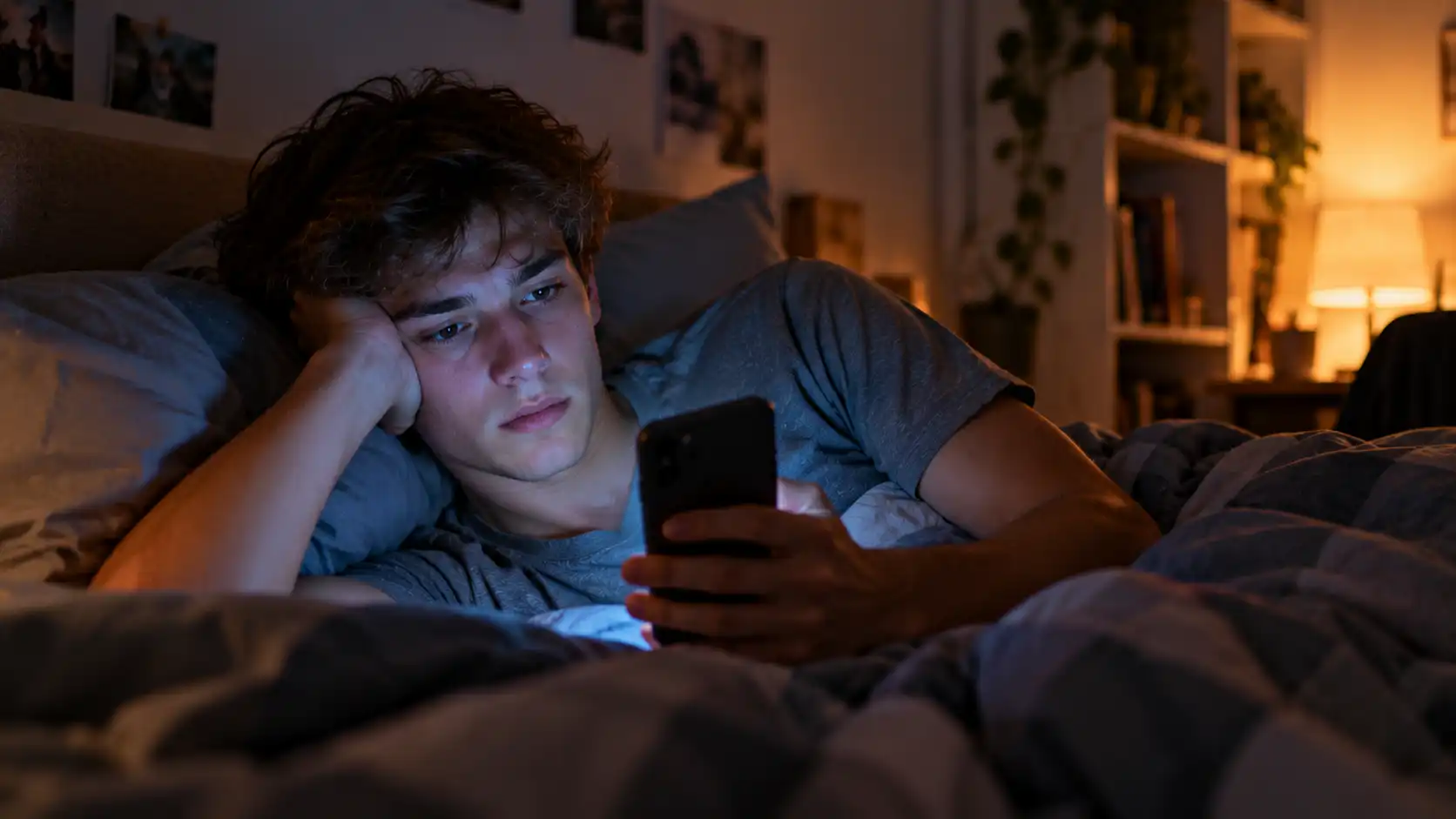
Screens can delay sleep by several mechanisms: light, cognitive stimulation, notifications, and time taken away from sleep. Their effect depends on the time, the duration, brightness and what you are doing on the screen.
Important
Important: Reducing screen use may help some people, but screens do not explain every case of insomnia. Avoid blaming yourself over rules unrelated to your situation.
A screen can disturb even at night with its dark mode on. The time spent on it and the content consulted add to the light effect.
Light is only part of the problem
Nighttime light, especially high in blue, can delay biological signals at night. But the content also matters: competitive play, work, social networks or distressing news are more likely to keep you awake than a quiet activity.
The related guide Light in the bedroom: why darkness matters explains evening darkness, daytime light and safe movement at night.
Screen time sometimes simply replaces sleep time.
The most obvious mechanism is often behavioural: “just five more minutes” turns into thirty or sixty minutes. When you have a fixed time to get up, the duration of sleep decreases.
Should we ban all screens several hours before bedtime?
Assurance Maladie, the French health insurance service, advises ideally turning off screens one hour before bedtime. Reducing brightness, avoiding stimulating content and silencing notifications can complement this break, without eliminating every effect. Age-appropriate rules and keeping devices out of reach at night are particularly useful for children and teenagers.
The related guide Teenage sleep: why falling asleep happens later explains later adolescent rhythms and fixed school obligations.
Children and teenagers need particular attention
Late screen time adds to a still high need for sleep and a body clock that naturally shifts in adolescence. Family rules work better when they cover timing, where devices are used and the content viewed.
Identify the effect of screens on your schedules
Try a quiet screen-free period before bed, turning off notifications. Establish family rules for your child or teenager, and avoid devices that remain accessible at night.
The related guide Regular bedtimes: why consistency matters explains consistent schedules that still allow enough time for sleep. The article Light in the bedroom: why darkness matters explains evening darkness, daytime light and safe movement at night.
To understand screen use, distinguish between three elements: the light received, the activity that keeps the person awake, and the time taken away from rest. Reducing one doesn’t necessarily reduce the others. A filter can change the light without making it easier to stop a conversation or a game. The most useful adjustment depends on what is actually delaying your bedtime.
The related guide Children’s sleep: how many hours do they need at each age? explains age-related sleep ranges that include naps. The article Teenage sleep: why falling asleep happens later explains later adolescent rhythms and fixed school obligations.
Frequently asked questions
Key takeaways
The effect of the screens combines light, stimulation and time taken away from sleep. Night mode doesn’t fix everything. A routine of gradual disconnection is often more helpful than an impossible ban. Try a quiet screen-free period before bed, turning off notifications. Establish family rules for your child or teenager, and avoid devices that are left open at night.
Sources
Assurance Maladie — Comment mieux dormir à l’âge adulte — 2024
Assurance Maladie — Adapter l’usage des écrans à l’âge — 2025
Last editorial check: October 2026
Partagez cet article, choisissez votre plateforme !
 Numa Costa
The pen name under which I write articles and develop my editorial websites. Curious by nature, I like to understand how things work, explore everyday questions and make information easier to understand and use.
→ More about the author
Related Posts







Understand your sleep,
live your nights better.