
Light in the bedroom: why darkness matters
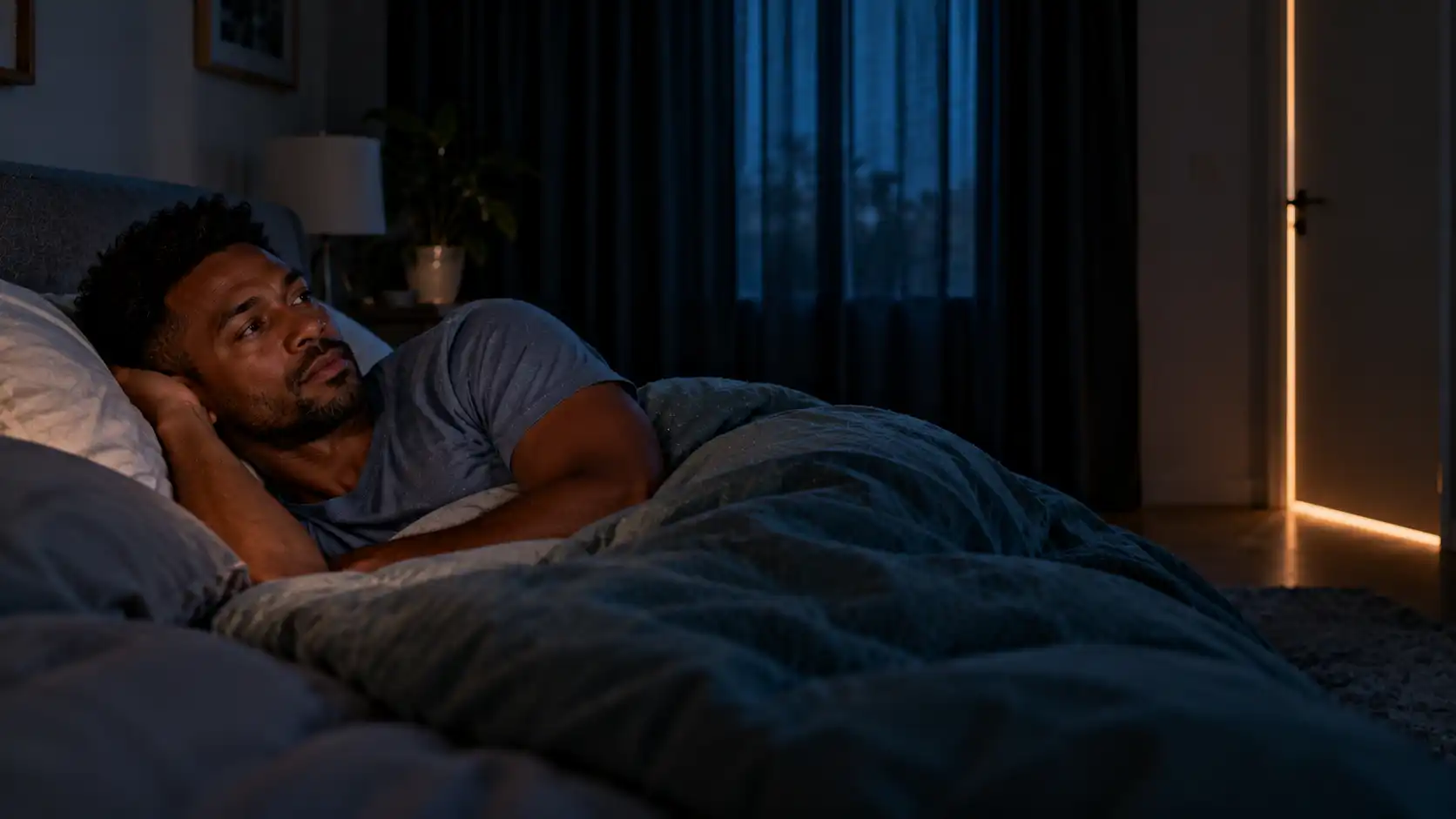
Darkness supports the biological signal at night, while bright or late light can delay falling asleep. The objective is not absolute darkness at all costs, but a sufficiently dark and unstimulating environment.
Important
Important: A dark bedroom often supports sleep, but unwanted light at night is different from useful natural light exposure during the day.
The light tells the biological clock the time of day. Reducing exposure to light at night and exposure to daylight are complementary objectives.
The light synchronizes the biological clock
The cells in the retina transmit information to the brain about day and night. In the morning, the light helps to stabilize the waking state; in the evening, reducing the intensity prepares the transition to sleep.
The related guide Circadian rhythm: understanding your body clock explains body-clock signals and the influence of light and daily schedules.
Small lights have varying effects
A dim nightlight differs from a powerful ceiling light or a very bright screen close to your face. Individual sensitivity and the colour of the light also matter.
Simple solutions are often enough
Blackout curtains, comfortable masks, extinguishing unnecessary lights and warmer and dimmer lighting in the evening reduce exposure without turning the room into a laboratory.
The related guide Night shifts: how can you protect your sleep? explains protected daytime rest and safety after a night shift.
In the morning we have to do the opposite.
For a normal daytime rhythm, opening the shutters and receiving natural light after getting up strengthens the day-night reference points. Night work and some rhythm disturbances require a different strategy. A light therapy lamp should not be used as a treatment without appropriate guidance.
Adapting light to rest and safety
Reduce unnecessary indicator lights and avoid lighting directed at the bed. Keep a route gently lit if you need to get up during the night, so you can move safely. Night workers need light-exposure advice suited to their shifts.
The related guide Circadian rhythm: understanding your body clock explains body-clock signals and the influence of light and daily schedules. The article Screens in the evening: do they really disrupt sleep? explains screen light, stimulating content and delayed bedtime.
The related guide Night shifts: how can you protect your sleep? explains protected daytime rest and safety after a night shift. The article Bedroom temperature: what is comfortable for sleep? explains temperature, bedding and practical adjustments to comfort.
The objective of night darkness must be reconciled with safe movement around the room. A person who has to get up needs to be able to move around safely. It is therefore useful to distinguish between all-night lighting and occasional lighting. Looking for a less bright environment does not mean imposing a room where you can no longer move about comfortably.
Frequently asked questions
Key takeaways
Light is an important signal for the body clock. Dimmer evenings and daylight after waking can support a usual daytime schedule. Reduce unnecessary indicator lights and light directed at the bed, while keeping enough light to move safely if you get up at night. Night workers may need a different approach tailored to their schedule.
Sources
Assurance Maladie — Comment mieux dormir à l’âge adulte — 2024
INRS — Travail en horaires atypiques — dossier institutionnel
Last editorial check: October 2026
Partagez cet article, choisissez votre plateforme !
 Numa Costa
The pen name under which I write articles and develop my editorial websites. Curious by nature, I like to understand how things work, explore everyday questions and make information easier to understand and use.
→ More about the author
Related Posts




Understand your sleep,
live your nights better.