
Noise at night: how can you protect your sleep?
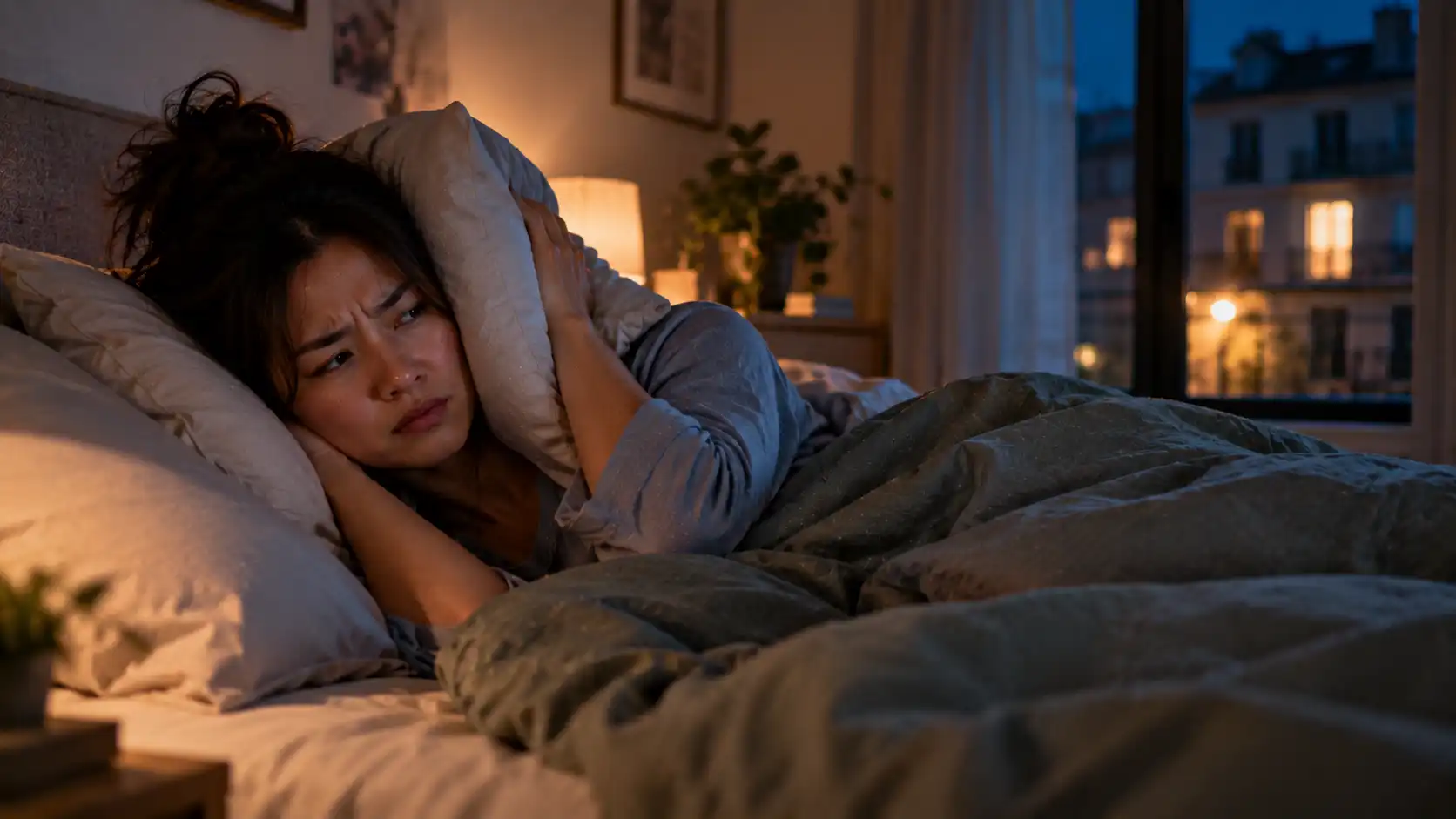
Noise can cause awakenings or nocturnal reactions without precise memory in the morning. Reducing noise sources and improving the quietness of the room can help. Earplugs and background noise have limits and must preserve the hearing of alarms.
Important
Important: Noise disturbance depends on intensity as well as repetition. When housing or safety issues are involved, an accessory may not be enough.
A sound can disrupt sleep without leaving a memory of waking. Identifying the source allows us to choose an appropriate answer rather than multiple accessories.
The brain keeps monitoring the environment.
During sleep, some sounds remain processed. Sudden, irregular, or meaningful noises, such as a voice or alarm, are more likely to trigger a reaction.
The related guide Snoring: when is it harmless, and when should you seek advice? explains snoring and associated symptoms that need assessment.
Identify the source before buying accessories
Traffic, neighbours, partner snoring, appliances or internal noise in the home are not corrected in the same way. Moving the bed, closing a door, maintaining an appliance or discussing a schedule may be enough.
Earplugs and white noise have limits
Suitable earplugs can improve comfort, with hygienic use and the ability to hear the necessary alerts. Some people appreciate a moderate background noise to mask sound variations, but its benefit is not guaranteed and it can itself interfere. Do not turn up the volume to cover a noisy environment.
The related guide Sharing a bed with different sleep schedules: how to make it work explains practical arrangements for partners with different schedules.
When the noise reveals another problem
If the main noise is an intense snoring with breathing pauses, the priority is not to isolate the partner but to assess the possible respiratory disorder.
Reduce night noise
Start by reducing the source of noise when possible. With earplugs or background noise, make sure you can hear the alarms and the people in your care.
The related guide Waking during the night: why does it happen? explains night-time awakenings and symptoms worth describing. The article Snoring: when is it harmless, and when should you seek advice? explains snoring and associated symptoms that need assessment.
A repeated nuisance needs to be located: street, neighbourhood, appliance or household habits. The possible solutions will not be the same. Avoidable noise in the room requires first an adjustment of its source; external nuisance may require another organisation. Whichever method is chosen, make sure you can still hear necessary alerts and check that the accessory does not add to the discomfort.
The related guide Sharing a bed with different sleep schedules: how to make it work explains practical arrangements for partners with different schedules. The article Bedroom temperature: what is comfortable for sleep? explains temperature, bedding and practical adjustments to comfort.
Frequently asked questions
Key takeaways
Sudden and irregular noises are particularly disturbing. Correcting the source is preferable when possible. Snoring with breathing pauses should be evaluated rather than simply masked. Start by reducing the source of noise when possible. With earplugs or background noise, make sure you can hear the alarms and the people in your care.
Sources
Assurance Maladie — Comment mieux dormir à l’âge adulte — 2024
Assurance Maladie — Apnée du sommeil symptômes et diagnostic — 2026
Last editorial check: October 2026
Partagez cet article, choisissez votre plateforme !
 Numa Costa
The pen name under which I write articles and develop my editorial websites. Curious by nature, I like to understand how things work, explore everyday questions and make information easier to understand and use.
→ More about the author
Related Posts







Understand your sleep,
live your nights better.